Monday, July 19, 2010

Winter Warmer

 The cold winter months are definitely upon us and some rich, comfort food is in order. So I'm going to share my recipe and tips on how to cook restaurant quality Braised Lamb Shanks, that fall away from the bone and melt in your mouth. 

The secret is a long, slow cooking process and reducing the cooking liquor down to make a sticky sauce.    


Braised Lamb Shanks

2 lamb medium shanks
100g carrot
100g celery
100g onion
10ml vegetable oil
2 garlic cloves, crushed
10g ground fennel seeds
50ml tomato paste
100ml red wine
2L veal or beef stock
2 thyme sprigs
20g butter, diced
seasoning


First, roughly cut the three vegetables. The french term for this combination of aromatics is called "mirepoix" and is used as the base for a variety of stocks, soups, stews and sauces.

Sautee the mirepoix, garlic and thyme with vegetable oil in a medium to large saucepan. 

Season the shanks with salt, pepper and fennel seed. Once the mirepoix is browned, add the shanks and seal them on all sides.

Next add the tomato paste and cook out for one to two minutes. Pour in the red wine. Using a wooden spoon free any sediment from the bottom of the pot. This is called "deglazing".
Reduce the wine by half. Cover the shanks with stock and bring to the boil. 
Simmer for one and a half to two hours or until meat is tender and comes away from the bone. Rotate shanks if needed to ensure even cooking.


Once shanks are cooked remove from the saucepan and set aside.


Strain the cooking liquor into a shallow pan and reduce until thick, this is called the "jus". Skim any oil or sediment that comes to surface. 


 To finish the jus stir in the cold diced butter, this thickens and adds flavour.

Reheat the lamb in a low oven with a small amount of sauce to keep it moist. 
Spoon the jus over the braised shanks and serve with your favourite winter vegetables. 


 I've chosen sweet potato and sweetcorn.


enjoy.

Tuesday, July 13, 2010

Mamak

Mamak is a Malaysian Roti and Satay eatery with a street market feel. It was voted "Best Asian" SMH Good Food Guide 2009.


 It can be recognised by it's long queue, extending for meters down Goulbourn St, Haymarket.
 I have wanted to dine at Mamak for a while now, I had noticed the line of patrons outside before and was eager to see what all the fuss was about.


This was my second visit, but first successful one, as the wait was way too long the first time. Unfortunately bookings cannot be made. So I suggest arriving a few minutes before it opens, at 5:30pm to ensure you are in the first sitting. As they turn over five times a night.


 Waiting in line is similar to waiting for a ride of an amusement park. The chefs entertain the hungry patrons through the front window by rolling and flicking the roti dough until it's wafer thin...


After being seated we start by sharing a Teh tarik, a classic Malaysian sweetened tea. ‘Stretched’ for a frothy topping with a hint of ginger.


We order our selections. We are told there is a wait for the roti as the kitchen if filled with orders already, which is understandable. The rest of the food however starts to arrive within ten minutes.

 
Nasi lemak. Fragrant coconut rice accompanied by an ensemble of sambal prawns, peanuts, crispy anchovies, cucumber and hard-boiled egg. 
Arguably Malaysia’s national dish.


Rojak. Prawn and coconut fritters, fried tofu, hard-boiled eggs, freshly shredded yambean and cucumber, topped with a thick spicy peanut sauce. 
The fritters are slightly sweet and balance the heat of the sauce. Cucumber is refreshing and cleanses palate.


Kari ikan. A tangy fish curry cooked with fresh tomatoes, okra and eggplant. The fish was cod and fell apart with ease. The curry was smooth and salty, great with coconut rice.


Chicken Satay skewers, half dozen. Flame grilled over charcoal which gave it a slightly smokey flavour. Served with the best satay I've ever tasted. Sweet and Spicy.


Roti canai. The original roti. Crispy on the outside, fluffy and doughy on the inside. 


Roti bawang. Folded with lashings of sweet red onions.

Very bold flavours. Spicy, but not overwhelming and very affordable. All this roughly came to $60, between two.
We leave with sniffely noses but very satisfied. 


Mamak

15 Golbourn Street
Haymarket

 Mamak on Urbanspoon

Monday, June 14, 2010

Fresh Pasta

The word pasta first appeared in English in 1874, from Italian pasta and from Latin pasta "dough, pastry cake".


There is nothing like eating fresh hand-made pasta. And the best pasta is made with "00" flour. It is less refined than regular flour and has 11.5%-12.5% high quality gluten, which is important in producing a quality dough. Alternatively a mix of semolina and plain flour can be used, a ratio of 1:3. A pasta machine is essential to roll your dough, if you don't have one they can be purchased from good home-ware stores or kitchen warehouses for as little as $30 or $40.

Here's my pasta recipe and a step by step guide;
 
Ingredients

565g "00" flour
12 yolks
2 eggs
tsp olive oil
tsp water 
pinch salt


Dough
Combine flour and salt in a large bowl. In a separate bowl, combine yolks, eggs, water and oil. Make a well in the centre of the flour. Gradually add the eggs, stirring constantly with a fork until dough comes together. 
 
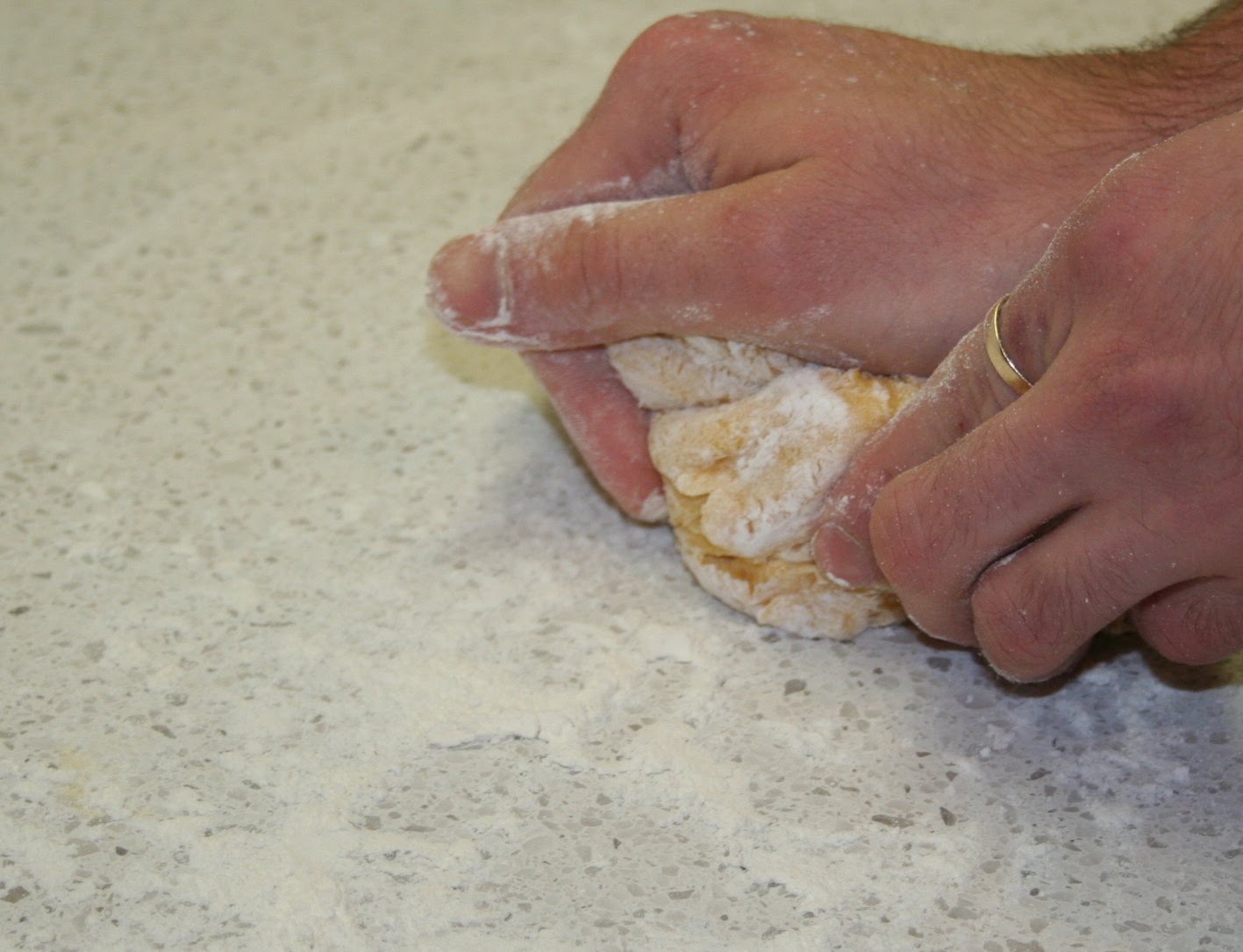
On a floured surface, knead the dough until soft and smooth. This is very important, it disperses moisture evenly and works the gluten, which strengthens the bonds of the dough. 

Wrap in cling wrap to prevent oxidisation and rest for 2 - 3 hours or overnight in the refrigerator. 

After sufficient resting time, your dough is ready to be rolled.

Rolling
First, secure the pasta machine to the bench top with a damp cloth underneath to prevent it from slipping. 

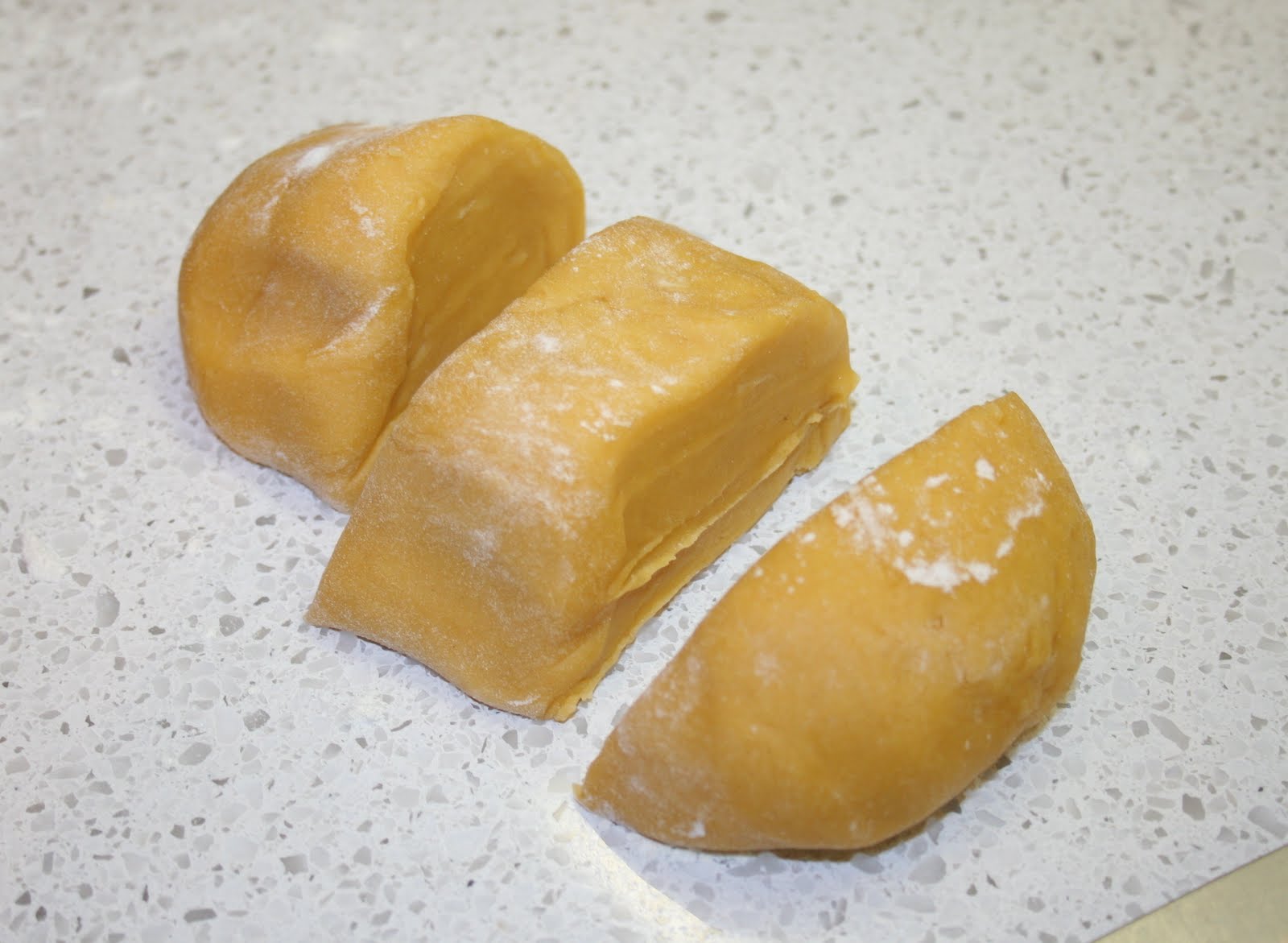
Lightly flour machine and bench top, set the machine to the widest setting. Divide the dough into smaller, more manageable pieces.  

Using a lightly floured rolling pin and surface, flatten a piece into a rectangle shape. (Keep other pieces under a damp cloth to prevent drying out).
 
Gently feed the dough through the rollers. Fold one side of the rolled dough into the centre, and the other over that to form three layers (this is called a book turn). 
  
Starting with an open side, feed back through the machine. Repeat this process four times. This ensures a smooth pasta and further works the gluten. 

Adjust the machine to the next narrowest setting. Feed the pasta through again with one hand and catch it with the other, being careful not to stretch or tear the sheet.
 

Roll pasta through at each setting until reaching the most narrow.

The pasta then can be used as sheets for lasagna or cut, into spaghetti or fettuccine.

To cut into fettuccine, attach the pasta-cutting attachment to the pasta machine according to your manual's instructions. Then feed the thinly rolled sheet of pasta into the cutting attachment, catching them by draping them over your hands as they're cranked out of the machine.

Either hang pasta on a drying rack or scattered over a tray dusted with flour. 


Cooking and Serving
Cook pasta in boiling salted water for 4 - 5 minutes, stirring periodically. Strain.

To enjoy the flavour of your fresh pasta simply toss in olive oil and lemon juice, top with shaved parmesan.


Tuesday, June 1, 2010

Assiette

New Zealand born chef Warren Turnbell and his team are the ones behind the magic at Assiette. It opened in 2005 and quickly earned a reputation for high quality at affordable prices. It's Sydney Morning Herald Chef’s hat was held for three consecutive years, until this year when it was awarded a highly prestigious second hat.

I'd eaten at Assiette before. A three course Friday lunch for only $35, amazing value, fine dining finally without the price tag. But recently I experienced the 10 course degustation with matching wine. Everything was amazing, a few stand outs were;

Cured Marlborough salmon with prawn beignet, pink grapefruit, freeze dried mandarin and fennel sorbet. Matched with 2008 Wairau River Pinot Gris. Mandarin had intense flavour and dissolved in my mouth... I could of eaten a whole bag. Play on a classic gravlax.

Seared tuna with smoked eel, beetroot jelly, wasabi cream and baby basil. Matched with 2008 Sutton Grange 'Estate' Rose.
Eel had a strong aroma, balanced well with the earthiness of the beetroot and jelly.


Ballontine of quail with prosciutto, chestnuts, white asparagus and crispy quail's egg. Matched with 2008 Giant Steps Chardonnay.My favourtie, perfect winter dish. Beautifully seasoned, soft gnocchi. Puree was like silk, perfectly cooked egg.


Pan fried dory with seared scallop, onion bhaji, cauliflower puree and mango chutney. Matched with 2008 Domaine Jean Baptiste Senat 'La Nine'.A bit left center compared to the rest of the menu. A great change. Spicy and great texture, surprisingly went well with the red.


Banana mousse with white chocolate icecream and peanut brittle. Matched with 'Liquid Gold' Rutherglen Tokay.
Smooth creamy mousse, with caramelised banana and brittle flavour blended into the rich Tokay.

Staff were friendly and informative even though the menu was only two weeks old. Leaving me very full, very drunk and very happy.
$95 or $155 with matching wine, I can strongly recommend Assiette.

Assiette
48 Albion Street
Surry Hills
02 9212 7979 
 
Assiette on Urbanspoon